


Emerging Challenges
Pressure grows on flag states to crack down China's distant-water fleet
Chinese-owned vessels have long used flags of convenience to operate with reduced oversight, and countries like Vanuatu are closing loopholes that enable abuse on the high seas.
Global Watch |
The Pacific island country of Vanuatu has struck three Chinese-owned vessels from its international shipping registry after Argentina imposed a record fine and related sanctions on the ships for illegal fishing in its exclusive economic zone.
The decision highlights growing pressure on flag states to curb the abuse of "flags of convenience" registries and enforce accountability on the high seas, where control of trade routes, resource flows and maritime access is increasingly treated as strategic leverage.
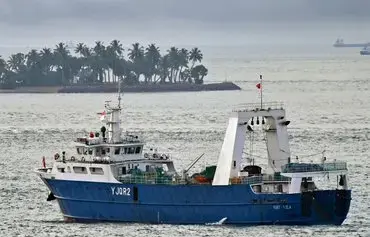
Argentina levied a record $900,000 fine on the Bao Feng, a Chinese-owned vessel flying the Vanuatu flag, for operating illegally inside its waters.
Two other vessels from the same Hai Shun Shipping Co. fleet, the Hai Xing 2 and Bao Win, were also sanctioned after being detected through electronic monitoring and Automatic Identification System (AIS) tracking data.
Vanuatu's International Shipping Registry (VISR) responded by removing all three vessels from its books.
Flag state accountability
The deregistration reflects a broader shift under Vanuatu's new VISR leadership, which took over in October 2024.
The administration inherited a system in need of reform and moved quickly to introduce zero-tolerance policies for illegal, unreported and unregulated (IUU) fishing.
Those reforms include mandatory ownership disclosure, 24-hour incident reporting, pre-approval for new fishing vessels, and round-the-clock monitoring backed by 2025 amendments to the Maritime Act.
VISR Administrator Saade Makhlouf made the stance clear.
"Vanuatu takes IUU risks seriously, and vessels exposing the flag to repeated regulatory or reputational risk will not be allowed to remain under the registry," he stated.
The move is designed to protect the country's reputation while addressing long-standing concerns over flags of convenience, which can allow distant-water fleets to operate with reduced oversight.
Campaigner Milko Schvartzman, who has tracked the fleet's activities off Argentina, described the outcome as "a strong step forward in the fight against IUU fishing and flags of convenience."
High seas governance
The case also draws attention to the scale of China's distant-water fleet -- widely regarded as the world's largest and numbering in the thousands -- within a broader push to secure resource flows and access across key maritime corridors.
Much of this activity is concentrated around areas such as "Mile 201", the largely unregulated stretch just beyond Argentina's EEZ.
Fishing pressure there has surged in recent years. According to the Environmental Justice Foundation, total fishing hours in the area rose 65 percent between 2019 and 2024, with Chinese vessels driving an 85 percent increase.
The ecological stakes are high.
Squid, a keystone species with a short life cycle, supports whales, seals, seabirds and commercially vital fish stocks. Overfishing risks damaging marine food webs, with ripple effects on coastal economies and seafood markets, including in Europe.
The concerns are not only environmental.
Investigations have also documented human rights abuses in parts of the fleet operating in the region, including excessive working hours, wage issues and wildlife cruelty.
Together, these problems expose deeper vulnerabilities in global seafood supply chains. Opaque ownership structures and at-sea transshipments make it harder to trace where seafood is caught, who controls the vessels, and whether crews are being treated lawfully.
Experts argue that stronger flag state enforcement must be matched by greater transparency regarding ownership, fishing locations and compliance records.
Vanuatu's action shows that targeted reforms by smaller registries can still deliver meaningful pressure.
It also aligns with wider calls for international cooperation, including agreed catch limits and technology-driven monitoring, to restore order on the high seas.
While only one step, the decision sends a clear signal: the era of unchecked ocean exploitation is facing growing resistance from coastal states and responsible flag nations.